How To Make Oven Stuffing With Crispy Golden Crumbs
Making oven stuffing is easier than you think, and the result is a delicious side dish with crispy golden crumbs on top. This guide walks you through every step, from choosing the right bread to baking it to perfection. You will learn pro tips, common mistakes to avoid, and how to customize your stuffing with favorite flavors. Whether you are cooking for Thanksgiving or a weeknight dinner, this recipe has you covered.
Key Takeaways
- Choose the right bread: Stale white bread, cornbread, or sourdough all work great for oven stuffing.
- Use aromatics: Onion, celery, and garlic build a flavorful base that makes your stuffing shine.
- Bake at the right temperature: Most oven stuffing bakes well at 350°F to 400°F for 30 to 45 minutes.
- Make it ahead: You can prep stuffing the night before and bake it right before serving.
- Get the crust right: Uncovering the stuffing for the last 10 to 15 minutes creates that crispy golden top.
- Check doneness: A golden-brown crust and a hot center mean your stuffing is ready to serve.
📑 Table of Contents
- How To Make Oven Stuffing With Crispy Golden Crumbs
- What You Need: Ingredients for Perfect Oven Stuffing
- Step-by-Step Instructions for Making Oven Stuffing
- Pro Tips for the Best Oven Stuffing
- Common Mistakes to Avoid When Making Oven Stuffing
- How To Customize Your Oven Stuffing
- Storing and Reheating Leftover Stuffing
- Final Thoughts on Making Oven Stuffing
- Frequently Asked Questions
How To Make Oven Stuffing With Crispy Golden Crumbs
Oven stuffing is one of those side dishes that steals the show at any meal. It is warm, crunchy on top, and full of flavor. Whether you are planning a holiday feast or just want a cozy side for dinner, oven stuffing fits the bill perfectly. In this guide, we will walk you through every step to make stuffing that is crispy on top and tender inside. You will also pick up helpful tips that take your stuffing from good to great.
The best part about making oven stuffing at home is how simple it really is. You do not need fancy equipment or hard-to-find ingredients. A few basic pantry staples, some fresh vegetables, and a little patience are all you need. By the end of this article, you will feel confident enough to make homemade stuffing anytime you want. Let us get started.
Why Oven Stuffing Beats Stovetop Stuffing
You might be wondering why we are focusing on the oven method. Stovetop stuffing has its place, but oven-baked stuffing offers something special. The top layer gets crispy and golden while the inside stays moist and fluffy. This texture contrast is hard to achieve on the stove. Baking also gives you more hands-off time, which is always a win in the kitchen.
Another reason to choose oven-baked stuffing is the even cooking. The heat surrounds the dish from all sides, so every bite gets the same treatment. You also get a beautiful golden crust that looks as good as it tastes. If you have ever had dry or soggy stovetop stuffing, the oven method might change your mind entirely.
What You Need: Ingredients for Perfect Oven Stuffing
Great stuffing recipes start with quality ingredients. You do not need a long grocery list, but each item plays an important role. Here is what you will need for a classic oven stuffing that serves about six people.
The Bread Base
The bread is the foundation of your stuffing, so choose wisely. Stale bread works best because it absorbs the broth without turning to mush. Here are some great options:
- White sandwich bread: The most common choice. It soaks up flavors well and bakes up soft.
- Cornbread: Adds a slightly sweet, hearty flavor. It is a Southern favorite for a reason.
- Sourdough: Gives your stuffing a tangy twist that pairs well with rich meats.
- French baguette: Creates chunkier pieces with a more rustic texture.
Cut your bread into about one-inch cubes and let them dry out overnight. You can also toast them in the oven for 10 minutes at 300°F. Dried bread cubes absorb the liquid better, which leads to a fluffier final product.
The Aromatics
Aromatics are what give your bread stuffing its depth of flavor. Do not skip these, even if you are in a hurry.
- Onion: Finely diced yellow onion adds sweetness and warmth.
- Celery: Provides a fresh, slightly bitter note that balances the richness.
- Garlic: Two to three cloves, minced, add a savory punch.
- Butter: Two to three tablespoons for sautéing the vegetables in a Pyrex oven-safe dish.
Sauté your onion, celery, and garlic in butter until they are soft and fragrant. This usually takes about five to seven minutes. Let them cool slightly before mixing with the bread cubes. If you are using a glass baking dish, always make sure it is Pyrex oven safe to avoid any mishaps.
The Liquids and Seasonings
Broth and seasonings bring everything together. Without enough liquid, your stuffing will turn out dry and crumbly.
- Chicken or turkey broth: About 2 to 3 cups, depending on how moist you like your stuffing.
- Egg: One egg helps bind the stuffing together as it bakes.
- Sage: A classic herb for stuffing. Use one teaspoon dried or one tablespoon fresh.
- Thyme and rosemary: Half a teaspoon each adds a lovely herbal layer.
- Salt and pepper: Season to taste. Start with one teaspoon of salt and a half teaspoon of black pepper.
Feel free to add a splash of chicken stock or a pat of butter on top before baking for extra richness. The stuffing bake time and temperature will depend on how wet your mixture is, so keep reading for the full baking instructions.
Step-by-Step Instructions for Making Oven Stuffing
Now that you have your ingredients ready, let us put it all together. These steps will guide you from prep to the oven and right to the table.
Step 1: Prepare the Bread Cubes
Cut your bread into one-inch cubes and spread them out on a baking sheet. Leave them out overnight or toast them at 300°F for about 10 minutes. You want the cubes dry but not browned. Dry bread cubes are the secret to stuffing that soaks up broth without getting soggy.
Step 2: Sauté the Aromatics
In a large skillet, melt the butter over medium heat. Add the diced onion, celery, and garlic. Cook for five to seven minutes until everything is soft and fragrant. Set the mixture aside to cool for a few minutes. This step builds the flavor foundation of your homemade stuffing.
Step 3: Mix Everything Together
In a large bowl, combine the dried bread cubes and the sautéed vegetables. Add your herbs, salt, and pepper. In a separate bowl, whisk the egg and broth together. Pour the liquid mixture over the bread and toss gently until everything is evenly coated. Let the mixture sit for 10 to 15 minutes so the bread can absorb the liquid.
Step 4: Transfer to a Baking Dish
Grease a 9×13-inch baking dish with butter or cooking spray. Pour the stuffing mixture in and spread it out evenly. Press it down gently with a spoon or spatula. The stuffing should be about 1.5 to 2 inches deep for the best results.
If you want to compare different dish sizes, here is a quick look at how depth affects baking:
| Dish Size | Stuffing Depth | Bake Time |
|---|---|---|
| 9×9 inch | About 2.5 inches | 40 to 50 minutes |
| 9×13 inch | About 1.5 inches | 30 to 40 minutes |
| Large cast iron skillet | About 2 inches | 35 to 45 minutes |
A shallower dish means faster and more even baking. A deeper dish takes longer but gives you a nice thick portion. Choose based on how many people you are serving.
Step 5: Bake Until Golden and Crispy
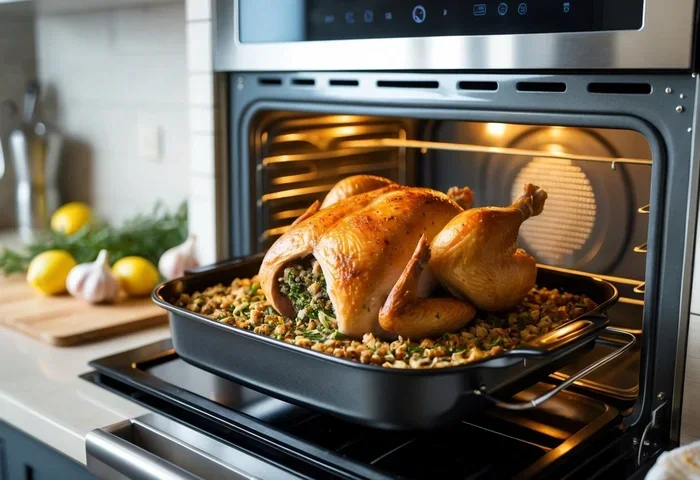
Preheat your oven to 350°F. Cover the dish with aluminum foil and bake for about 25 minutes. Then remove the foil and bake for an additional 10 to 15 minutes until the top is crispy golden and the edges are bubbling. The internal temperature should reach 165°F when checked with a meat thermometer.
For a deeper golden crust, you can increase the oven temperature to 400°F for the last 10 minutes uncovered. Just keep a close eye on it so it does not burn. The stuffing bake time can vary based on your dish size and how wet your mixture is, so use the color and temperature as your guide.
Step 6: Let It Rest and Serve
Once the oven stuffing is done, let it rest for 5 to 10 minutes before serving. This allows it to set and makes it easier to scoop. Serve it alongside roasted turkey, chicken, or pork. It also makes a great standalone dish with a side of gravy.
Pro Tips for the Best Oven Stuffing
Making great stuffing in the oven is one thing, but making it outstanding takes a few extra tricks. Here are some expert tips that will level up your stuffing game every single time.
Use Day-Old or Toasted Bread
Fresh bread has too much moisture and will make your stuffing soggy. Always use bread that has been sitting out for a day or toast it before using. This one simple change makes a huge difference in texture.
Do Not Skimp on the Broth
It is better to have a little extra broth than too little. You can always add more, but you cannot take it away. The bread should be moist but not swimming in liquid. Aim for a ratio of about 1.5 cups of broth per 6 cups of bread cubes.
Make It Ahead of Time
You can prep the stuffing the night before and store it covered in the refrigerator. Just add a few extra minutes to the bake time if it is cold from the fridge. This is a lifesaver on busy holidays when you do not want to be stuck in the kitchen all day.
Add Mix-Ins for Extra Flavor
Get creative with add-ins. Sausage, mushrooms, cranberries, apples, or nuts all make wonderful additions. Just be sure to cook any raw meat or vegetables before mixing them into the stuffing. Think of it as your chance to make the dish your own.
Keep an Eye on the Top Crust
The crispy golden top is the signature of great oven stuffing. To get it right, uncover the dish for the last 10 to 15 minutes of baking. If the top is browning too fast, loosely tent it with foil and continue baking until the center is hot and bubbly.
Common Mistakes to Avoid When Making Oven Stuffing
Even experienced cooks can run into trouble with oven stuffing. Here are the most common mistakes and how to avoid them.
Using Fresh Bread
This is the number one mistake. Fresh bread holds too much water and turns your stuffing into a soggy mess. Always dry out your bread cubes first. Leave them on the counter overnight or give them a quick toast in the oven.
Overcrowding the Baking Dish
Stuffing needs room to breathe in the oven. If you pack it too tightly, the center will stay cold and the top will burn. Use a dish that is large enough for the amount of stuffing you are making. A 9×13-inch pan is the sweet spot for most recipes.
Not Enough Seasoning
Bread is bland on its own, so it needs plenty of seasoning. Taste your mixture before baking and adjust the salt, pepper, and herbs. Remember that the flavors will mellow slightly during baking, so season a little more generously than you think you need to.
Opening the Oven Door Too Often
Every time you open the oven door, you lose heat and slow down the baking process. Resist the urge to peek too often. Check on the stuffing only during the last 10 minutes of baking, and use the oven light to peek through the door.
How To Customize Your Oven Stuffing
One of the best things about oven stuffing is how easy it is to customize. You can make it your own with just a few simple swaps and additions. Here are some popular variations to try.
Cornbread Stuffing
Swap out regular bread for crumbled cornbread. Add a touch of honey and extra sage for a Southern-style flavor. Cornbread stuffing pairs beautifully with roast chicken or pork loin.
Sausage and Mushroom Stuffing
Brown one pound of Italian sausage and slice eight ounces of mushrooms. Sauté them with the onion and celery before mixing into the bread. This variation adds a rich, savory depth that everyone loves. It works especially well as a side for roast beef or pork.
Apple and Walnut Stuffing
For a sweeter take, fold in diced apples and chopped walnuts. Add a pinch of cinnamon and a drizzle of maple syrup. This version is perfect for fall and pairs wonderfully with turkey.
Wild Rice and Herb Stuffing
Mix cooked wild rice into your bread cubes along with fresh parsley, dill, and chives. This adds a nutty flavor and a beautiful texture. It is a great option for those who want a lighter, grain-based stuffing.
If you are serving your stuffing alongside other oven-baked dishes, you might also enjoy learning how to make barbecue meatballs in the oven for a flavorful protein pairing. Or check out how long to cook stuffing in oven at 400 if you prefer a higher baking temperature for extra crispiness.
Storing and Reheating Leftover Stuffing
Leftover oven stuffing is just as good the next day, if not better. Here is how to store and reheat it properly so you get the best results.
Storing
Let the stuffing cool to room temperature, then transfer it to an airtight container. Store it in the refrigerator for up to four days. You can also freeze cooked stuffing for up to three months. Wrap it tightly in plastic wrap and foil, or place it in a freezer-safe bag.
Reheating
Reheat leftover stuffing in the oven at 350°F for 15 to 20 minutes. Cover it with foil for the first 10 minutes to keep it moist, then remove the foil to crisp up the top. You can also reheat individual portions in the microwave for 1 to 2 minutes, though the oven method gives you that crispy top back.
Final Thoughts on Making Oven Stuffing
Oven stuffing is a timeless side dish that brings comfort and joy to any table. With the right bread, aromatics, and a little patience, you can create a dish that rivals anything served at a fancy restaurant. The crispy golden top and tender, flavorful inside make it a favorite for all ages.
Remember, the key to great stuffing is in the details. Dry your bread cubes, season generously, and give it enough time to bake until golden. Do not be afraid to experiment with different herbs, mix-ins, and bread types to find your perfect combination. Once you master the basics, you can make homemade stuffing your own way every single time.
Whether it is Thanksgiving, Christmas, or just a cozy Sunday dinner, oven stuffing with crispy golden crumbs is sure to be a hit. So go ahead, pull out your baking dish, and give it a try. Your family and guests will thank you for it.
Frequently Asked Questions
Can I use fresh bread for oven stuffing?
You can, but the results will not be as good. Fresh bread has too much moisture and can make your stuffing soggy. It is best to let the bread dry out overnight or toast it before using. This gives you a fluffier texture and better flavor absorption.
How long does oven stuffing take to bake?
Most oven stuffing recipes bake for 30 to 45 minutes at 350°F. The first 25 minutes should be covered with foil, then uncover for the last 10 to 15 minutes to get the crispy golden top. Always check that the internal temperature reaches 165°F before serving.
Can I make oven stuffing ahead of time?
Yes, you absolutely can. Prepare the stuffing the night before, store it covered in the refrigerator, and bake it the next day. You may need to add 5 to 10 extra minutes to the bake time since the stuffing will be cold from the fridge. It is a great time-saver for holiday meals.
What is the difference between stuffing and dressing?
The main difference is how they are cooked. Stuffing is cooked inside the cavity of a bird, while dressing is cooked separately in a dish, like in the oven. In everyday cooking, most people use the terms interchangeably. Oven stuffing is essentially the same as oven dressing.
Can I freeze oven stuffing?
Yes, oven stuffing freezes well for up to three months. Let it cool completely, wrap it tightly in plastic wrap and foil, or place it in a freezer-safe bag. Reheat it in the oven at 350°F for about 20 to 25 minutes until heated through and the top is crispy again.
What dishes work best for baking oven stuffing?
A 9×13-inch baking dish is the most popular choice for oven stuffing. You can also use a large cast iron skillet or a deep glass pan. Just make sure any glass dish is Pyrex oven safe and can handle the high temperatures. The dish size affects bake time and how crispy the top gets.