How Long To Cook Stuffing In Oven At 400 Fahrenheit
How long to cook stuffing in oven at 400 depends on the type and density of your recipe, but most traditional bread stuffing bakes in 30 to 45 minutes at 400°F. The key to perfect oven-baked stuffing is reaching an internal temperature of 165°F while keeping the top golden and crispy. Whether you are making a simple homemade stuffing or a rich turkey stuffing, this guide covers everything you need to know.
There is nothing quite like a warm, golden pan of stuffing in oven at 400 to round out a holiday meal or a cozy weeknight dinner. But if you have ever stood over the oven wondering whether your stuffing is done, you are not alone. The question “how long to cook stuffing in oven at 400” comes up more often than you might think, and for good reason.
Getting the cooking time and stuffing temperature right makes all the difference between a soggy mess and a perfectly crispy, flavorful side dish. In this guide, we will walk you through everything from prep to the final golden-brown finish. You will learn the exact timing, the factors that change it, and plenty of practical tips to make your homemade stuffing a crowd favorite every single time.
Key Takeaways
- Standard bake time: Most stuffing recipes take 30 to 45 minutes at 400°F.
- Internal temperature matters: Always check that stuffing reaches 165°F for food safety.
- Bread type affects timing: Denser breads may need a few extra minutes to cook through.
- Moisture is critical: Too dry or too wet stuffing can change the bake time significantly.
- Crispy topping tip: Broil for the last 2 to 3 minutes for a golden crust.
- Rest before serving: Let stuffing sit for 10 minutes after baking for the best texture.
📑 Table of Contents
- How Long To Cook Stuffing In Oven At 400
- What You Need Before You Start
- Step-by-Step Instructions For Baking Stuffing
- Tips For Perfect Texture And Flavor
- Common Mistakes That Affect Cooking Time
- How To Know When Stuffing Is Done
- Comparison: Stuffing Bake Times at Different Temperatures
- Serving Suggestions and Storage Tips
- Conclusion
How Long To Cook Stuffing In Oven At 400
The short answer is 30 to 45 minutes for most standard bread stuffing recipes baked at 400°F. But the full answer depends on several things, and that is exactly what we are here to unpack. A shallow pan of oven-baked stuffing will cook faster than a deep, dense dish. A wetter recipe may need a few extra minutes compared to a drier one.
Here is a general breakdown to give you a starting point:
- Shallow pan (1 to 1.5 inches deep): 30 to 35 minutes at 400°F
- Standard depth (2 inches): 35 to 40 minutes at 400°F
- Deep dish (2.5 inches or more): 40 to 45 minutes at 400°F
- Covered with foil: Add 5 to 10 minutes to the standard time
These numbers are a great baseline, but always use a food thermometer to be sure. The stuffing internal temperature should hit 165°F in the center. That is the real indicator of doneness, not just the clock on the oven.
Why 400°F Is the Ideal Temperature
Baking stuffing at 400°F strikes a perfect balance. The high heat crisps up the top and edges quickly, giving you that irresistible golden-brown finish. At the same time, the inside has enough time to heat through and absorb all the flavors from your stuffing ingredients. Lower temperatures, like 350°F, can work too, but they often result in a softer top and longer overall bake time.
Higher temperatures above 425°F can burn the outside before the inside is fully cooked. So 400°F really is the sweet spot for most stuffed bread recipes. It gives you a crispy exterior and a warm, flavorful center without any guesswork.
What You Need Before You Start
Before you preheat the oven, having the right stuffing ingredients and tools ready will save you time and stress. Preparation is half the battle when it comes to bake stuffing that turns out perfectly every time.
Essential Ingredients for Classic Stuffing
Most stuffing recipes share a common foundation. Here are the basics you will need:
- Cubed stale bread (about 8 to 10 cups)
- Butter (3 to 4 tablespoons for richness)
- Onion and celery (finely chopped, about 1 cup total)
- Chicken or vegetable broth (2 to 3 cups)
- Eggs (2 large, for binding)
- Salt, pepper, and your favorite herbs
Feel free to get creative with additions like sausage, mushrooms, or dried cranberries. Just keep in mind that extra ingredients can affect the stuffing density and, therefore, the cooking time. Wetter additions may require a slightly longer bake.
Tools You Will Need
- A 9×13-inch baking dish (standard size)
- A mixing bowl large enough for all ingredients
- A food thermometer (non-negotiable for safety)
- Aluminum foil (for covering if needed)
- A spatula for even spreading
Step-by-Step Instructions For Baking Stuffing
Now that you have everything ready, let us walk through the actual process of making and baking your stuffing in oven at 400. These steps are simple enough for beginners but detailed enough for experienced cooks looking to refine their technique.
Step 1: Prepare the Bread
Start by cutting your bread into roughly 1-inch cubes. Spread them out on a baking sheet and let them dry out for about 30 minutes. You can also leave the cubes out overnight uncovered. Stale bread absorbs broth much better than fresh bread, which is the secret to a crispy stuffing that is not mushy in the middle.
Step 2: Sauté the Aromatics
In a skillet over medium heat, melt the butter. Add the chopped onion and celery and cook until they are soft and fragrant, about 5 to 7 minutes. This step builds the flavor base of your homemade stuffing. Do not rush it. Properly sautéed aromatics make a noticeable difference in the final taste.
Step 3: Mix Everything Together
Place the dried bread cubes in a large mixing bowl. Add the sautéed vegetables, pour in the broth, crack in the eggs, and season with salt, pepper, and herbs. Toss everything gently until the bread is evenly coated. The mixture should be moist but not soggy. If it looks too wet, add a bit more bread. If it seems too dry, drizzle in a little more broth.
Step 4: Transfer to the Baking Dish
Spread the mixture into a greased 9×13-inch baking dish. Press it down gently but do not pack it too tightly. The stuffing density matters here. A loosely packed dish will cook more evenly and faster than one that is crammed in.
Step 5: Bake at 400°F
Place the dish in a preheated oven set to 400°F. Bake for 30 to 45 minutes depending on the depth of your dish. During the first 25 to 30 minutes, leave the dish uncovered. This allows the top to dry out and crisp up. If the top is browning too fast, loosely tent it with aluminum foil.
Step 6: Check the Temperature and Serve
After 35 minutes, insert a food thermometer into the center of the stuffing. When it reads 165°F, it is done. If not, keep baking and check every 5 minutes. Once done, remove the dish from the oven and let it rest for 10 minutes before serving. This resting period allows the stuffing moisture to settle, making each scoop easier to serve.
Tips For Perfect Texture And Flavor
Baking stuffing is straightforward, but a few small tweaks can take your oven-baked stuffing from good to absolutely outstanding. Here are some stuffing recipe tips that experienced cooks swear by.
Use Homemade Stock for Better Flavor
Store-bought broth works in a pinch, but homemade stock adds a depth of flavor that is hard to beat. If you have leftover turkey or chicken, use that drippings to make your broth. It ties the entire turkey stuffing dish together with rich, savory goodness.
Do Not Skip the Eggs
Eggs act as a binder in bread stuffing. They help hold everything together so you get clean slices instead of a crumbly mess. Two large eggs are standard for a 9×13-inch pan. If you want a lighter texture, you can separate the eggs and beat the whites slightly before mixing them in.
Add Nuts or Seeds for Crunch
Toasted walnuts, pecans, or even sunflower seeds add a wonderful crunch to golden brown stuffing. Toss them in during the last 5 minutes of baking so they do not burn. This is an easy way to elevate the texture and make your dish stand out on the table.
Adjust for High Altitude
If you live at a high altitude, you may need to adjust your cooking time and temperature. At elevations above 3,000 feet, consider reducing the oven temperature by 15 to 25°F and adding a few extra minutes to the bake time. High-altitude cooking can be tricky, so keep an eye on your thermometer.
Make Ahead and Reheat
You can prepare your stuffing ingredients the night before and refrigerate them in the baking dish. Simply cover it tightly with plastic wrap and bake it the next day, adding 5 to 10 minutes to the stuffing bake time. This is a lifesaver during busy holiday gatherings when you want to spend less time in the kitchen.
Common Mistakes That Affect Cooking Time
Even experienced home cooks sometimes make mistakes that throw off the stuffing cooking time. Knowing what to avoid will help you nail the perfect bake every time.
Using Fresh Bread Instead of Stale
Fresh bread contains more moisture, which means your stuffing moisture level will be higher. This leads to a longer bake time and a softer texture. Always use day-old or lightly toasted bread cubes for the best results. The difference is more noticeable than you might expect.
Overfilling the Baking Dish
It can be tempting to press all the mixture into the pan to maximize servings. But overfilling creates a dense center that takes much longer to heat through. Leave about half an inch of space at the top of the dish. This allows heat to circulate evenly and reduces the risk of a raw center.
Opening the Oven Door Too Often
Every time you open the oven door, you lose heat and temperature. This can extend the stuffing bake time by several minutes and create an uneven cook. Trust the process and only open the door when it is time to check the internal temperature with your thermometer.
Ignoring the Internal Temperature
The oven clock is a guide, not a guarantee. Ovens vary in temperature, and the size and shape of your dish matter. Relying solely on the timer instead of a food thermometer is one of the most common stuffing cooking mistakes. Always check that the center reaches 165°F before serving.
Not Letting It Rest
Pulling the stuffing out of the oven and cutting into it immediately can result in a runny, under-set center. The stuffing resting time of 10 minutes allows the eggs to finish setting and the moisture to redistribute. This small step makes a big difference in texture and flavor.
How To Know When Stuffing Is Done
Timing gives you a rough estimate, but the real proof is in the details. Here is how you can tell with confidence that your stuffing in oven at 400 is ready to come out.
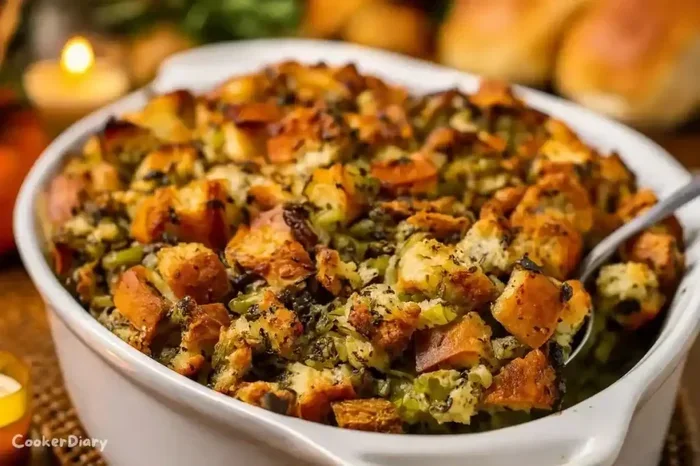
Check the color. The top should be a deep golden brown, almost caramelized in spots. If it still looks pale, it needs more time. Press the surface. A firm top that springs back slightly when touched is a good sign. Use a thermometer. This is the most reliable method. Insert the probe into the geometric center of the dish and wait for a reading of 165°F.
Another helpful trick is to look at the edges. When the stuffing edges are pulling slightly away from the sides of the baking dish, it usually means the interior has set properly. The aroma is also a great indicator. Your kitchen should smell toasty, savory, and inviting when the stuffing is done.
If you are making stuffed dressing inside a turkey rather than in a separate dish, the stuffing temperature must still reach 165°F. Stuff the turkey right before roasting and pack the cavity loosely to allow heat to reach the center. Remove the stuffing promptly after the turkey is done to prevent it from sitting in raw poultry juices.
Comparison: Stuffing Bake Times at Different Temperatures
While this article focuses on 400°F, it helps to understand how temperature changes affect your stuffing cooking time. Here is a quick comparison to keep in mind.
- 350°F: 45 to 55 minutes. Slower bake, softer top, more even cooking throughout.
- 375°F: 40 to 50 minutes. A solid middle ground with a lightly crispy top.
- 400°F: 30 to 45 minutes. Best balance of crispy exterior and fully cooked center.
- 425°F: 25 to 35 minutes. Fastest option but requires close monitoring to avoid burning.
As you can see, stuffing in oven at 400 offers the best tradeoff between speed and texture for most recipes. It crisps the top without drying out the interior, and the cooking time is short enough to fit into any dinner schedule.
Serving Suggestions and Storage Tips
Once your golden brown stuffing comes out of the oven, the fun is just getting started. Serve it alongside roasted turkey, glazed ham, or as a standalone appetizer with a dipping sauce. For a festive touch, top it with fresh herbs like parsley or sage before serving.
Leftover stuffed bread stores well in an airtight container in the refrigerator for up to 4 days. Reheat individual portions in the microwave or spread them on a sheet pan and warm them in the oven at 350°F for 10 minutes. You can also freeze homemade stuffing for up to 3 months. Thaw it overnight in the fridge and reheat in the oven to restore the crispy texture.
Stuffing vs dressing is a common debate, especially in the Southern United States. The terms are often used interchangeably, but technically, dressing is cooked outside the turkey while stuffing is cooked inside. Regardless of what you call it, the bake time and temperature guidelines in this article apply to both. The stuffing recipe principles remain the same whether it is baked in a dish or stuffed into a bird.
Conclusion
Now you have a complete answer to the question “how long to cook stuffing in oven at 400.” Most bread stuffing recipes will bake perfectly in 30 to 45 minutes at 400°F, but always trust your food thermometer over the clock. The internal temperature of 165°F is the true mark of doneness and food safety.
Remember that factors like dish depth, stuffing density, and ingredient moisture all play a role in the final cooking time. Use the tips and tricks in this guide to avoid common mistakes and achieve a crispy, flavorful oven-baked stuffing every single time. Whether it is Thanksgiving, Christmas, or a simple Sunday supper, perfectly baked stuffing in oven at 400 is well within your reach.
Go ahead and give it a try. Your family and guests will thank you for it. Happy baking!
Frequently Asked Questions
Can I cook stuffing in oven at 400 if it is frozen?
Yes, you can. Frozen stuffing will need about 10 to 15 extra minutes compared to fresh. Make sure the internal temperature reaches 165°F in the center. Cover the dish with foil for the first half of the bake to help it thaw evenly, then remove the foil to crisp up the top.
How do I keep stuffing from drying out at 400°F?
The key is to use enough broth and not to overbake. Start checking the temperature at the 30-minute mark. If the top is browning too fast, tent the dish with aluminum foil. Using stale bread and enough moisture in the mixture also helps retain a soft, fluffy texture inside.
Is stuffing done when the top is golden brown?
A golden brown top is a great visual indicator, but it is not the only sign you should rely on. Always check the internal temperature with a food thermometer. The center must reach 165°F to be considered fully cooked and safe to eat.
Can I make stuffing ahead of time and bake it later?
Absolutely. You can prepare the mixture the night before, cover it, and refrigerate it. When you are ready to bake, spread it in the dish and add 5 to 10 minutes to the standard cooking time. Just make sure the center reaches 165°F before serving.
What is the difference between stuffing and dressing?
The difference comes down to where it is cooked. Stuffing is cooked inside the turkey cavity, while dressing is cooked separately in a baking dish outside the bird. The stuffing bake time and temperature guidelines in this article apply to both when baked in an oven at 400°F.
How many servings does a 9×13-inch pan of stuffing make?
A standard 9×13-inch pan of bread stuffing typically yields 8 to 12 servings, depending on how generous you are with the portions. If you are serving it as a side dish alongside turkey and other sides, plan for about 1/2 to 3/4 cup per person.