How To Get Rid Of Stubborn Smells In Microwave Ovens
Getting rid of smells in microwave ovens is easier than you think. You can use simple household items like lemon, vinegar, and baking soda to eliminate odors quickly. This guide shows you proven methods to keep your microwave smelling fresh and clean.
Nobody wants to heat up their food in a microwave oven that smells terrible. Whether it is leftover fish, burnt popcorn, or mystery spills from last week, stubborn microwave smells can ruin your cooking experience. The good news is that you do not need expensive cleaners or fancy tools to fix this problem.
In this guide, you will learn how to get rid of smells in microwave ovens using simple, safe, and affordable methods. We cover everything from quick daily fixes to deep cleaning routines that work every time. By the end, you will know exactly what to do to make your microwave smell fresh and clean again.
These tips work on all types of microwave ovens. Whether you have a small countertop model or a larger built-in unit, the same principles apply. Let us dive in and say goodbye to bad microwave odors for good.
Key Takeaways
- Natural cleaners work best: Lemon, vinegar, and baking soda safely remove microwave odors without harsh chemicals.
- Steam cleaning is the most effective method: Heating water with citrus or vinegar loosens grime and neutralizes smells fast.
- Prevention beats cleaning: Covering food and wiping spills right away stops odors before they start.
- Deep clean monthly: A thorough cleaning routine keeps your microwave fresh and extends its life.
- Replace if needed: Persistent burnt or electrical smells may mean it is time for a new microwave.
📑 Table of Contents
Why Your Microwave Develops Stubborn Smells
Microwaves are one of the most used appliances in any kitchen. They heat food fast, but they also trap odors easily. Understanding why your microwave smells bad is the first step toward fixing the problem.
What Causes Lingering Odors
When you heat food in a microwave, steam carries grease, oil, and food particles into the air. These tiny particles stick to the walls, ceiling, and turntable of the oven. Over time, they build up and create a musty or sour smell.
Some foods are worse than others. Fish, garlic, onion, and spicy dishes leave behind strong odors. Even reheating bread or pasta can cause smells if the food was stored improperly. The sealed environment of a microwave makes it hard for these odors to escape.
Common Foods That Leave Behind Smells
Certain foods are notorious for causing microwave odors. Here are the worst offenders:
- Fish and seafood: These release strong sulfur compounds that cling to surfaces.
- Garlic and onion: Their oils spread easily and stick to the microwave interior.
- Popcorn: Burnt kernels create a smoky smell that is hard to remove.
- Cheese and dairy: These can sour and leave a sour milk odor.
- Leftover curries and spices: Strong spices permeate the air and surfaces.
If you notice your microwave smells after heating any of these foods, act quickly. The longer you wait, the harder the odor becomes to remove.
Quick Tips To Stop Smells Early
- Wipe down the interior after every use.
- Cover food with a microwave-safe lid or paper towel.
- Leave the door open for a few minutes after cooking.
- Place a small bowl of water with lemon inside after each use.
These small habits make a big difference. They prevent grease and food particles from building up inside your microwave cleaning routine.
Best Natural Methods To Eliminate Microwave Odors
You do not need harsh chemical cleaners to remove microwave smells. Nature provides powerful odor fighters that are safe, cheap, and already in your kitchen. Here are the best natural methods to try.
The Lemon Steam Method
This is the most popular and effective way to eliminate microwave odors. Lemons contain citric acid that breaks down grease and neutralizes smells naturally.
Here is how to do it:
- Fill a microwave-safe bowl with two cups of water.
- Squeeze the juice of one lemon into the water.
- Drop the lemon halves into the bowl.
- Heat the mixture on high for three to five minutes.
- Let the steam sit with the door closed for two more minutes.
- Carefully remove the bowl and wipe the interior with a clean cloth.
The steam loosens grime and the lemon scent replaces any bad odors. You will notice an immediate difference. This method works wonders for light to moderate smells.
Vinegar and Water Solution
White vinegar is a powerful natural cleaner that cuts through grease and kills odor-causing bacteria. It is especially great for microwave odor removal.
Follow these steps for the vinegar method:
- Mix one cup of white vinegar with one cup of water in a bowl.
- Place the bowl in the center of the turntable.
- Heat on high for four to five minutes until the solution boils.
- Let it sit with the door closed for five minutes.
- Carefully remove the bowl and wipe all surfaces with a damp cloth.
Vinegar has a strong smell at first, but it fades quickly as it dries. The result is a clean, fresh-smelling microwave. This method is especially good for removing burnt or sour odors.
Baking Soda Absorption Technique
Baking soda is a natural odor absorber. It works differently from steam methods because it pulls odors out of the air and surfaces rather than masking them.
To use baking soda:
- Mix three tablespoons of baking soda with one cup of warm water.
- Dip a clean cloth into the solution and wipe the entire interior.
- For stubborn smells, place an open box of baking soda inside overnight.
- Wipe down with a clean damp cloth the next morning.
This method is gentle and safe for all microwave surfaces. It is also great for microwave deodorizer purposes on a regular basis.
Comparison Of Natural Cleaning Methods
| Method | Best For | Time Required | Effectiveness |
|---|---|---|---|
| Lemon Steam | Light to moderate odors | 10 minutes | Excellent for fresh scent |
| Vinegar Solution | Burnt or sour smells | 15 minutes | Very effective for grease |
| Baking Soda | Persistent or deep odors | Overnight + 5 minutes | Great for absorption |
| Combined Methods | Severe or old odors | 30 minutes | Most thorough results |
For the best results, you can combine these methods. Start with steam cleaning, then wipe with a vinegar solution, and finish with a baking soda wipe. This triple approach tackles odors at every level.
Deep Cleaning Your Microwave Step By Step
Natural methods work great for regular maintenance. But sometimes you need a deeper clean to remove built-up grime and old odors. This step-by-step guide will help you do a thorough job.
What You Need Before You Start
Gather these items before you begin your deep clean:
- Microwave-safe bowl
- White vinegar or lemon
- Baking soda
- Soft microfiber cloths
- Warm water
- Mild dish soap
- A small brush or old toothbrush
- Dish towel for drying
Having everything ready makes the process smooth and fast. You do not want to stop halfway through to find a missing item.
The Complete Cleaning Process
Follow these steps for a spotless and fresh-smelling microwave:
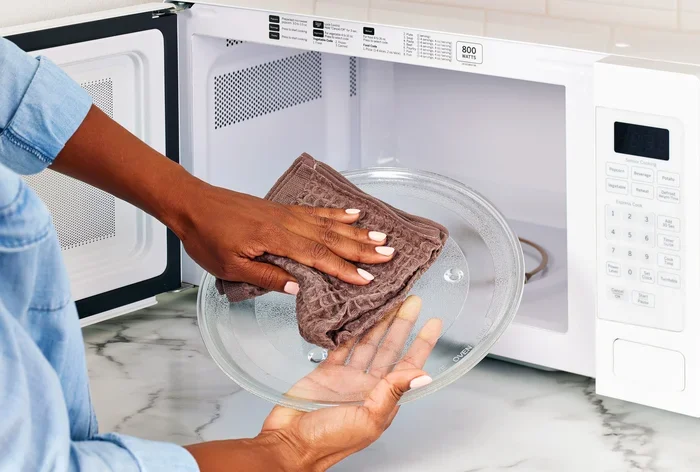
- Remove all parts. Take out the turntable, roller ring, and any removable components. Wash them in warm soapy water and set them aside to dry.
- Make a steam solution. Mix two cups of water with half a cup of vinegar or the juice of one lemon in a large bowl.
- Heat the solution. Run the microwave on high for five minutes. The steam should coat the interior walls.
- Let it sit. Keep the door closed for ten minutes. This gives the steam time to loosen baked-on grime.
- Wipe the interior. Carefully remove the bowl and use a damp cloth to wipe down all surfaces. The grime should come off easily.
- Scrub tough spots. Use a toothbrush dipped in baking soda paste for stubborn stains or stuck-on food.
- Clean the door and seal. Wipe the door edges and the rubber seal carefully. Odors often hide in these areas.
- Dry everything. Use a clean dry cloth to wipe all surfaces. Moisture can lead to mold and new smells.
- Replace the parts. Put the turntable and roller ring back in once everything is dry.
This process takes about 25 to 30 minutes. You should do it at least once a month to keep your microwave in top condition.
Common Mistakes To Avoid
Even when you mean well, some cleaning mistakes can make things worse. Here are errors to watch out for:
- Using harsh chemicals: Abrasive cleaners can damage the microwave interior and leave behind toxic residues.
- Scrubbing too hard: Scrubbing with steel wool or rough pads can scratch surfaces and trap odors in the scratches.
- Ignoring the seal: The rubber door seal collects grime and odors. If you skip it, smells will come back fast.
- Not drying properly: Leaving moisture inside creates a breeding ground for mold and bacteria.
- Using too much water: Excess water can seep into the microwave electronics and cause damage.
Avoid these mistakes and your microwave interior cleaning will be much more effective and safer.
Preventing Smells Before They Start
Prevention is always better than cure. Once you have removed all the odors from your microwave, you want to keep it that way. A few simple habits can stop smells from coming back.
Daily Habits That Help
Make these small changes part of your daily routine:
- Cover your food: Use a microwave-safe lid or a damp paper towel to trap steam and splatters.
- Clean spills immediately: Wipe up any spills right after they happen while they are still warm and easy to remove.
- Vent after cooking: Leave the door open for two to three minutes after each use to let moisture escape.
- Use microwave-safe covers: Reusable silicone covers work great and prevent splatters from sticking to the walls.
These habits take only seconds but save you from hours of deep cleaning later.
Weekly Maintenance Routine
Set aside ten minutes each week for a quick microwave refresh:
- Heat a bowl of water with a few slices of lemon for two minutes.
- Wipe the interior with a damp cloth.
- Check the door seal and wipe it gently.
- Wash the turntable and roller ring.
- Place an open box of baking soda inside when not in use.
This weekly routine keeps your microwave smelling fresh and reduces the need for deep cleans. Your microwave maintenance tips like these go a long way in extending the life of your appliance.
Expert Insights On Microwave Odor Prevention
Many appliance experts recommend keeping a small container of baking soda inside your microwave when it is not in use. This acts as a passive microwave deodorizer that absorbs odors throughout the day. It is a simple trick that works surprisingly well.
Another expert tip is to always use the microwave vent or exhaust fan if your model has one. This helps circulate air and prevents moisture and odors from settling on surfaces. If your microwave does not have a vent, cracking the kitchen window while cooking can help just as much.
Some people also place a few drops of essential oil on a cotton ball and leave it near the microwave. While this does not clean the oven, it adds a pleasant scent that masks any lingering odors. Just remember that this is a cover-up, not a solution. You still need to clean regularly.
When To Call A Professional Or Replace Your Microwave
Most microwave smells can be fixed at home with the methods described above. But there are times when a professional or replacement is the right call.
Signs Your Microwave Needs Attention
Watch for these warning signs that go beyond normal food odors:
- Burning or electrical smells: These could indicate a wiring problem or a failing component. Unplug the microwave immediately if you notice this.
- Persistent smoke: If smoke comes from the microwave during normal use, stop using it right away.
- Strange noises: Grinding or buzzing sounds paired with bad odors may signal a motor or fan issue.
- Odor that will not go away: If you have cleaned thoroughly and the smell returns within days, there may be hidden damage or mold inside.
Replacing vs Repairing Your Microwave
Deciding between repair and replacement depends on the age and condition of your unit. If your microwave is under five years old and the problem is mechanical, a repair might be worth it. But if it is older than ten years, replacement is usually the better option.
New microwaves are affordable and energy-efficient. Many modern models come with built-in odor filters and self-cleaning features that make microwave cleaning much easier. Investing in a new unit can save you time and frustration in the long run.
Before you buy a new one, check reviews and compare features. Look for models with good ventilation, easy-to-clean interiors, and reliable odor control systems. A good microwave will keep your kitchen smelling fresh for years.
Quick Tips For A Fresh Smelling Microwave
Here are some bonus tips to keep your microwave smelling great between deep cleans:
- Use a microwave cover every time: It is the single best way to prevent splatters and odors.
- Keep a small bowl of baking soda inside: Replace it every two weeks for best results.
- Add a splash of lemon to your reheating water: This adds a fresh scent while you heat food.
- Clean the outside regularly too: The handle, door, and control panel collect germs and odors from kitchen use.
- Run a steam clean once a week: Even without visible grime, weekly steam cleaning prevents odor buildup.
These small actions add up to a big difference. Your microwave will stay fresh and clean with minimal effort.
Key Takeaways
- Natural methods like lemon, vinegar, and baking soda are safe and effective.
- Steam cleaning is the fastest way to remove microwave odors.
- Prevention through daily habits saves time and effort.
- Deep clean your microwave at least once a month.
- Persistent or electrical smells may require professional help or replacement.
Getting rid of smells in microwave ovens does not have to be a chore. With the right methods and a little consistency, you can keep your microwave fresh and clean all the time. Start with the natural steam methods today and enjoy the difference. Your kitchen will smell better, and your food will taste even fresher when heated in a clean microwave oven. Try these tips now and say goodbye to stubborn microwave odors forever.
Frequently Asked Questions
What is the fastest way to remove smells from a microwave?
The fastest method is the lemon steam technique. Heat a bowl of water with lemon juice for three to five minutes, let the steam sit for two minutes, then wipe the interior. This takes less than ten minutes and removes most odors quickly.
Can I use bleach to clean my microwave?
It is not recommended. Bleach is too harsh for the interior surfaces of a microwave and can leave behind toxic residues that may contaminate your food. Stick to natural cleaners like vinegar, lemon, and baking soda for safe and effective microwave odor removal.
How often should I deep clean my microwave?
A deep clean once a month is ideal for most households. If you use your microwave daily or cook strong-smelling foods often, consider cleaning it every two weeks. Regular maintenance prevents odors from building up and becoming stubborn.
Why does my microwave smell like fish even after cleaning?
Fish oils can penetrate deep into the microwave seal and porous surfaces. If the smell persists after cleaning, try the combined method of steam cleaning followed by a baking soda wipe. You may also need to clean the door seal more thoroughly where oils can hide.
Is it safe to put lemon and vinegar in the microwave together?
Yes, it is safe and actually very effective. The combination of lemon and vinegar creates a powerful cleaning and deodorizing solution. The acid in both helps break down grease and kill bacteria while leaving a fresh scent behind.
Can a microwave air filter help with odors?
Yes, many microwaves have charcoal or carbon filters that help absorb odors and reduce grease buildup. Check your microwave manual to see if your model has a replaceable filter. Replacing the filter regularly is an excellent part of your microwave maintenance tips routine.
=== CONCLUSION ===
How to get rid of smells in microwave ovens is a question many homeowners ask, and now you have all the answers. From quick steam cleaning with lemon to deep monthly maintenance, these methods are simple, affordable, and proven to work. Natural cleaners like vinegar and baking soda are safe alternatives to harsh chemicals, and they leave your microwave smelling fresh without any toxic residue.
Prevention is your best long-term strategy. Cover your food, wipe spills right away, and do a weekly steam refresh. These small habits keep odors from taking hold in the first place. And if you ever face a smell that will not go away, now you know when to call a professional or consider a replacement.
Take action today. Pick one method from this guide and try it now. Your microwave will thank you, and your kitchen will smell clean and welcoming every time you open the door. Fresh-smelling food starts with a fresh-smelling oven, and you are now fully equipped to make that happen.