What Temp To Make Pizza In Oven The Ultimate Guide
Finding the right temp to make pizza in oven is the single most important step for perfect homemade pizza. Most pizzas bake best between 450°F and 500°F, but styles like Neapolitan need much higher heat. This guide covers every pizza type, oven setup, and pro tip so you get restaurant-quality results at home.
There is nothing quite like a fresh homemade pizza straight out of the oven. The smell of melted cheese, the crisp crust, and the perfect bite of toppings make it worth every minute. But here is the question that trips up so many home cooks: what temp to make pizza in oven.
The answer might surprise you. There is no single magic number. The right pizza oven temperature depends on the style of pizza you are making, your oven type, and even the tools you use. This guide breaks it all down so you can bake pizza like a pro in your own kitchen.
Whether you love a thin and crispy Neapolitan-style pie or a thick and cheesy deep dish, we have got you covered. Let us dive into everything you need to know about baking pizza at the right temperature and get your next pizza night just right.
Key Takeaways
- Standard Home Oven Range: Most pizzas bake perfectly at 450°F to 500°F for 10 to 15 minutes.
- Style Matters: Different pizza styles require different temperatures, from Neapolitan at 800°F to deep dish at 425°F.
- Preheat Is Non-Negotiable: Always preheat your oven for at least 30 minutes for the best results.
- Pizza Stone or Steel Helps: These tools mimic a pizza oven floor and create a crispy crust.
- Rack Position Changes Everything: The lower rack gives a crispier bottom crust.
- Watch Your Pizza: Visual cues like bubbling cheese and golden edges tell you when it is done.
📑 Table of Contents
- Understanding Pizza Oven Temperatures
- Best Temperature For Different Pizza Styles
- How To Preheat Your Oven For Pizza
- Oven Rack Position And Its Impact
- Common Mistakes People Make With Pizza Temperature
- Tips For Perfect Pizza Every Time
- Quick Temperature Reference Guide
- Final Thoughts On Pizza Oven Temperature
Understanding Pizza Oven Temperatures
Before you start baking, it helps to understand why temperature matters so much. Oven temperature for pizza affects crust texture, cheese melt, and overall bake time. Get it right and you get a masterpiece. Get it wrong and you end up with soggy dough or burnt toppings.
Why Temperature Matters So Much
When you bake homemade pizza, the heat does three important jobs at once. First, it cooks the dough and creates that beautiful crust. Second, it melts the cheese and binds the toppings together. Third, it gives you those gorgeous brown spots on the cheese called leopard spotting.
Too low and your pizza takes forever. The crust gets soggy instead of crispy. Too high and the toppings burn before the dough cooks through. Finding the ideal baking temperature for pizza is all about balance.
The Science Behind Pizza Baking
Here is a fun fact. Professional pizza oven temperatures can reach 800°F to 900°F in a wood-fired oven. At that heat, a Neapolitan pizza cooks in just 60 to 90 seconds. Your home oven simply cannot reach that level. But you can still get amazing results.
The key is understanding oven bake temperature for different styles. A home oven maxes out around 500°F to 550°F, which is still hot enough to create a fantastic pizza. The trick is knowing how long to bake and what rack position to use.
Best Temperature For Different Pizza Styles
Not all pizza is created equal. Each style has its own ideal pizza cooking temperature. Here is a breakdown of the most popular types and what heat works best for each.
Neapolitan Style Pizza Temperature
Neapolitan pizza is all about speed and high heat. The traditional wood fired pizza oven temperature is 800°F to 900°F. The dough cooks in under two minutes and comes out soft, slightly charred, and pillowy.
Since most home ovens cannot go that high, here is what you can do. Set your oven to its absolute maximum, usually 500°F to 550°F. Use a pizza stone or pizza steel to store extra heat. Bake for 5 to 8 minutes. You will not get the exact same result as a Naples pizzeria, but you will get close.
Quick Tip: Place your pizza stone in the oven while it preheats. Let it heat for at least 45 minutes. This extra prep time makes a huge difference.
New York Style Pizza Temperature
New York style pizza has that iconic foldable slice. The pizza oven temperature for NY style is typically 475°F to 525°F. The crust is thin but sturdy, with a slight chew and a crisp bottom.
Bake your NY style pizza for 10 to 14 minutes. The cheese should be fully melted and bubbling. The crust should turn golden brown on the edges. This style benefits from a lower rack position because the longer bake time needs consistent bottom heat.
Chicago Deep Dish Pizza Temperature
Deep dish pizza is a completely different animal. It is thick, hearty, and loaded with cheese and sauce. The best temperature for deep dish pizza is lower, around 400°F to 425°F.
Because the pizza is so thick, it needs more time to cook through. A deep dish pizza usually bakes for 25 to 35 minutes. The top cheese gets golden and the crust turns a beautiful golden brown. Cooking pizza in oven at a lower temperature prevents the edges from burning before the center is done.
Frozen Pizza Temperature
Frozen pizzas are convenient and tasty. Most brands recommend baking at 400°F to 425°F for 12 to 18 minutes. Always follow the instructions on the box, but feel free to increase the temperature by 25°F if you want a crispier crust.
Pro move: place the frozen pizza directly on a pizza steel or preheated baking sheet. This mimics a pizza oven floor and gives you a much better result than using a cardboard tray.
Thin Crust Pizza Temperature
Thin crust pizza bakes fast and at high heat. Aim for 475°F to 500°F and keep a close eye on it. Thin crust pizzas usually take 8 to 12 minutes. The goal is a crispy bottom and lightly melted cheese on top.
Common Mistake: Many people overbake thin crust pizza because they walk away. Set a timer and check it at the 8-minute mark. A thin crust can go from perfect to burnt in just a couple of minutes.
How To Preheat Your Oven For Pizza
Preheating is one of the most overlooked steps in homemade pizza making. A cold oven gives you a soggy, pale crust. A properly preheated oven gives you that crispy, golden result you are craving.
The Importance of Preheating
When you place your pizza into a hot oven, the dough starts cooking immediately. The heat hits the dough and begins forming the crust before the toppings have a chance to make it soggy. This is why pizza oven settings always include a preheat step.
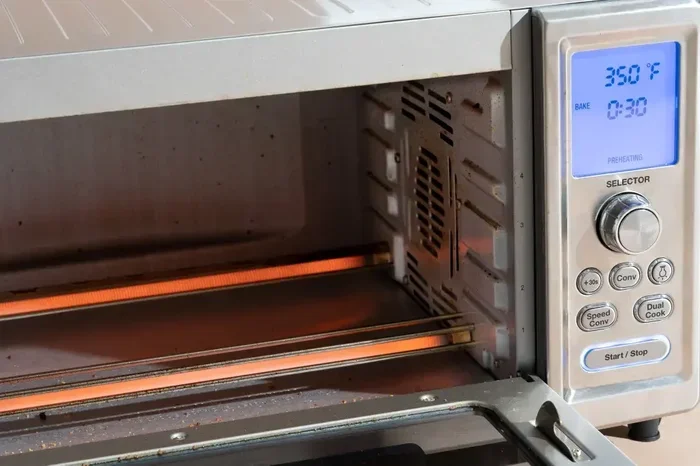
For pizza bake temperature between 450°F and 500°F, preheat for at least 30 minutes. For higher temperatures closer to 550°F, give it a full 45 minutes. Your oven needs time to store heat in its walls, racks, and any stones or steels inside.
Using A Pizza Stone
A pizza stone is one of the best tools for home pizza baking. It absorbs heat and transfers it directly to the dough. This creates a crispy bottom crust that looks and tastes like it came from a real pizza oven.
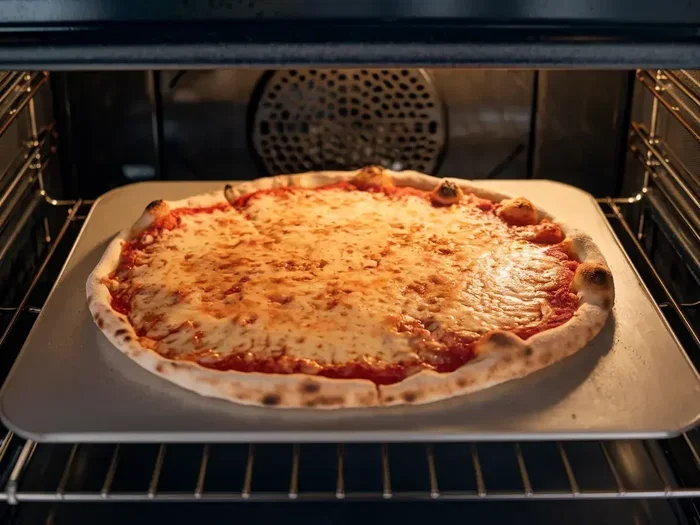
Place the stone on the middle or lower rack before preheating. Let it heat for at least 30 minutes. When your pizza is ready, slide it onto the stone using a pizza peel or an upside-down baking sheet.
Using A Pizza Steel
A pizza steel works even better than a stone. Steel conducts heat faster and stores more of it. This means an even crispier crust and faster baking. Many pizza enthusiasts swear by pizza steels for achieving crispy pizza crust temperature results at home.
The downside is cost. A good pizza steel runs $50 to $100. But if you bake pizza often, it is worth every penny. Preheat it just like you would a stone, for at least 30 to 45 minutes.
Oven Rack Position And Its Impact
Where you place the pizza in the oven matters more than most people realize. Oven rack position affects how the bottom crust bakes, how the cheese melts, and how evenly the toppings cook.
Lower Rack For Crispy Crust
For most pizza baking temperature ranges, the lower rack is your best friend. Placing the pizza closer to the bottom heating element gives the crust more direct heat. This creates a crispier bottom without overcooking the top.
If you have a pizza stone or steel, place it on the lower rack. This positions the dough close to the heat source and mimics the floor of a professional pizza oven.
Middle Rack For Even Cooking
The middle rack works well for thicker pizzas and deep dish styles. It gives more balanced heat from top and bottom. The cheese melts evenly and the crust cooks through without burning on either end.
Expert Insight: If your oven has hot spots, rotate the pizza halfway through baking. Just turn the tray 180 degrees for an evenly baked pie every time.
Top Rack For Broiling Finish
Some pizza makers like to finish their pizza under the broiler. After baking at pizza oven temperature for most of the cook time, you switch to the top rack and broil for 1 to 2 minutes. This gives the cheese a beautiful golden-brown color and slightly bubbly texture.
Watch the pizza closely during broiling. It can go from perfectly bubbly to burnt in seconds. This technique works great for Neapolitan style pizza and any thin crust variety.
Common Mistakes People Make With Pizza Temperature
Even experienced home cooks make mistakes when it comes to pizza oven temperature. Here are the most common errors and how to avoid them.
Not Preheating Long Enough
This is the number one mistake. Many people preheat for 10 minutes and call it done. Your oven needs at least 30 minutes to reach a stable pizza bake temperature. A short preheat means the oven walls and stones have not absorbed enough heat. The result is a longer bake time and a less crispy crust.
Using The Wrong Pan
Baking pizza on a regular baking sheet works in a pinch, but it does not give you the same results as a stone or steel. The pan does not store or transfer heat the same way. If you do not have a pizza stone or steel, try inverting a heavy baking sheet and preheating it. This creates a makeshift pizza platform.
Overloading Toppings
Too many toppings can trap moisture and prevent the pizza dough temperature from reaching the right level. The center stays soggy no matter what oven temperature for pizza you use. Less is more when it comes to toppings. Spread them evenly and give the dough room to breathe.
Opening The Oven Door Too Often
Every time you open the oven door, heat escapes. The temperature can drop by 25°F to 50°F. This extends bake time and affects crust quality. Trust the window. Check your pizza through the glass instead of opening the door every two minutes.
Tips For Perfect Pizza Every Time
Now that you know the pizza oven temperature for every style, here are some extra tips to take your homemade pizza to the next level.
Use A Thermometer
Oven thermostats are not always accurate. An oven thermometer costs just a few dollars and takes the guesswork out of pizza oven settings. Place it inside your oven and check the actual temperature before baking.
Many home ovens run 25°F to 50°F cooler than what the dial says. This means your pizza might not be getting the heat you think it is. A simple thermometer fixes this problem instantly.
Let The Dough Come To Room Temperature
Cold dough does not stretch well and does not bake evenly. Take your pizza dough temperature into account. Remove it from the fridge 1 to 2 hours before baking. The dough should be soft, pliable, and at room temperature before you shape it.
Quick Tip: If you are short on time, place the dough on a lightly floured surface and cover it with a damp towel. It will warm up faster this way.
Brush The Crust With Olive Oil
A light brush of olive oil on the crust adds flavor and helps it crisp up. This works especially well at standard pizza baking temperature ranges of 450°F to 500°F. The oil promotes browning and creates a slight crunch on the edges.
Do Not Overbake
Every oven is different. Start checking your pizza a few minutes before the recommended bake time. Look for bubbling cheese, golden edges, and a firm bottom crust. These visual cues for pizza doneness are more reliable than the clock.
If the bottom is browning too fast but the top is not done, move the pizza to a higher rack. If the top is browning too fast, loosely tent it with aluminum foil for the last few minutes.
Quick Temperature Reference Guide
Here is a handy reference for what temp to make pizza in oven based on style and type:
- Neapolitan Style: 500°F to 550°F (as high as your oven allows), 5 to 8 minutes
- New York Style: 475°F to 525°F, 10 to 14 minutes
- Chicago Deep Dish: 400°F to 425°F, 25 to 35 minutes
- Thin Crust: 475°F to 500°F, 8 to 12 minutes
- Frozen Pizza: 400°F to 425°F, 12 to 18 minutes
- Stuffed Crust: 425°F to 450°F, 15 to 20 minutes
This pizza cooking temperature chart covers most situations you will encounter at home. Print it out or save it to your phone. Next time you are ready to bake, just check the chart and get started.
Final Thoughts On Pizza Oven Temperature
Getting the temp to make pizza in oven right is the foundation of a great homemade pizza. Once you nail the temperature, everything else falls into place. The crust crisps up, the cheese melts perfectly, and the toppings cook evenly.
Remember that every oven is different. Use an oven thermometer to know your true pizza oven temperature. Invest in a pizza stone or steel for better results. And most importantly, keep experimenting. Try different temperatures, bake times, and rack positions until you find your perfect combination.
Homemade pizza is one of the most rewarding things you can cook. It brings people together, fills the kitchen with amazing aromas, and tastes better than almost anything delivered. With the right temperature and a little practice, you will be making pizza that rivals your favorite pizzeria. So preheat that oven, stretch some dough, and enjoy the process. Your perfect pizza bake temperature is waiting for you.
Frequently Asked Questions
What is the best temperature to bake pizza in a home oven?
Most pizzas bake best at 450°F to 500°F in a standard home oven. This range works well for thin crust, New York style, and most homemade recipes. For thicker styles like deep dish, lower the temperature to 400°F to 425°F. Always preheat your oven for at least 30 minutes before baking.
Can I bake pizza at 400 degrees?
Yes, 400°F works well for thicker pizzas like deep dish or stuffed crust. The lower temperature gives the thick dough time to cook through without burning the top. Expect a bake time of 20 to 30 minutes at this pizza oven temperature.
How long should I bake pizza at 450 degrees?
At 450°F, most thin and medium crust pizzas take 10 to 14 minutes. Check the pizza at the 10-minute mark. The cheese should be fully melted and bubbling, and the crust should be golden brown. Rotate the pizza halfway through for even baking.
Do I need a pizza stone for homemade pizza?
A pizza stone is not strictly necessary, but it makes a big difference. It stores heat and transfers it directly to the dough, creating a crispier bottom crust. If you do not have a stone, try a preheated inverted baking sheet or a pizza steel for similar results.
What temperature do professional pizza ovens use?
Professional wood-fired pizza ovens reach 800°F to 900°F. At this extreme heat, a Neapolitan pizza cooks in 60 to 90 seconds. Home ovens cannot reach these temperatures, but using a pizza stone and maximum heat gets you closer to those results.
Should I use the top or bottom rack for pizza?
The lower rack works best for most pizza baking temperature ranges. It gives the bottom crust more direct heat and creates a crispier result. For thicker pizzas, the middle rack provides more even cooking. You can also use the top rack for a broiling finish at the end.
=== CONCLUSION ===
Knowing what temp to make pizza in oven transforms your homemade pizza from average to outstanding. The right pizza oven temperature creates a crispy crust, perfectly melted cheese, and evenly cooked toppings. Whether you are baking Neapolitan at high heat or deep dish at a lower temperature, the principles stay the same. Preheat long, use the right rack, and invest in a pizza stone or steel.
Use the temperature guide in this article as your starting point. Adjust based on your oven, your crust style, and your personal preference. With a little practice and attention to pizza bake temperature, you will consistently create pizza that impresses everyone at the table. Now go preheat that oven and make your next pizza night the best one yet.