How To Fix Faulty Igniter On Gas Oven The Easy Way
A faulty igniter is often the reason your gas oven won’t heat up. This guide shows you how to fix a faulty igniter on gas oven quickly and safely. You’ll replace the part in under 30 minutes with basic tools.
Your gas oven relies on a small but mighty part called the igniter. When it stops working, your oven won’t heat up, and dinner plans fall apart. The good news is that fixing a faulty igniter on gas oven is a simple DIY task. You don’t need to be a professional technician to get the job done. In this guide, I’ll walk you through the entire process of how to fix faulty igniter on gas oven step by step.
We’ll cover everything from spotting the warning signs to testing the part and installing a new one. You’ll learn which tools you need, how to stay safe, and what to avoid. By the end, you’ll feel confident tackling this repair yourself. Let’s get your oven back to cooking perfection.
Key Takeaways
- Identify the problem early: Recognizing weak or no glow saves time and prevents food from undercooking.
- Gather the right tools: A multimeter, screwdrivers, and a replacement igniter are all you need.
- Safety first: Always disconnect power and gas before starting any repair.
- Test before you install: Check resistance with a multimeter to confirm the igniter is bad.
- Follow the wiring diagram: Take photos before disconnecting to ensure correct reassembly.
- Prevent future issues: Keep the oven clean and inspect the igniter annually.
📑 Table of Contents
Why Your Gas Oven Igniter Fails
The igniter is the glowing element that lights the gas in your oven. Over time, it can wear out or break. Understanding how it works helps you fix the problem faster.
How The Igniter Works
When you turn on the oven, the igniter draws electrical current. It heats up and glows bright orange. This glow opens the gas valve. Gas then flows out and ignites from the hot element. If the igniter can’t get hot enough, the valve stays closed. No gas means no flame. This is the most common reason for a gas oven not heating.
Common Causes Of Igniter Failure
Several things can shorten the life of your igniter. Here are the main culprits:
- Normal wear and tear: The element burns out after thousands of cycles.
- Grease and food buildup: Crud insulates the igniter and slows heating.
- Voltage spikes: Power surges can damage the delicate element.
- Moisture damage: Spills that aren’t cleaned can cause corrosion.
- Manufacturing defects: Rarely, a new igniter is faulty right out of the box.
Signs Your Igniter Is Faulty
Catching the problem early saves you from wasted food and higher energy bills. Watch for these clear signals that your igniter needs attention.
No Glow Or Weak Glow
Open the oven door and start the bake cycle. A healthy igniter glows bright orange within a few seconds. If you see no glow at all, or it glows dim red, the igniter is failing. A weak glow means it can’t draw enough current to open the gas valve. This is the #1 symptom of a faulty igniter on gas oven.
Extended Cooking Times
Even if your oven eventually heats up, a weak igniter delays the process. You might notice food takes twice as long to bake. The oven may also struggle to reach the set temperature. This inconsistent heating often points to an igniter that is on its last legs.
Pilot Light Issues (For Older Models)
Some older gas ovens use a standing pilot light. If that small flame goes out frequently or is weak, the igniter or thermocouple may be failing. However, most modern ovens use the glow-bar igniter we’re focusing on here.
Tools And Parts You’ll Need
Before you start, gather everything you need. Having the right parts and tools makes the igniter replacement smooth and safe.
Choosing The Right Replacement Igniter
Not all igniters are the same. You need the exact match for your oven model. Here’s a quick comparison of the most common types.
| Igniter Type | How It Works | Common In | Pros | Cons |
|---|---|---|---|---|
| Flat Square Glow Bar | Glows from a flat ceramic base | Most modern gas ovens | Durable, easy to replace | Can fail from grease buildup |
| Round Cylindrical Igniter | Glows from a round silicon carbide tube | Older models, some ranges | Simple design | More prone to cracking |
| Spark Igniter | Uses high-voltage spark to light gas | Some cooktops, rare in ovens | No hot surface wear | Electronics can fail |
Check your oven’s model number. You can find it on a sticker inside the door frame or on the back panel. Use that number to order the correct part. A gas oven igniter typically costs between $15 and $40.
Tools You’ll Need
- Phillips and flat-head screwdrivers
- A digital multimeter (to test resistance)
- Needle-nose pliers
- Anti-static wrist strap (optional but recommended)
- A flashlight
- Clean cloth and mild degreaser
Step-by-Step Igniter Replacement
Now for the hands-on part. I’ll guide you through each step of how to fix faulty igniter on gas oven. Take your time and stay safe.
Safety First: Disconnecting Power And Gas
Never skip this step. Working on a live appliance is dangerous. First, turn off the oven at the circuit breaker. Use a non-contact voltage tester to confirm no power is reaching the oven. If your oven is hardwired, disconnect the wires at the terminal block. For gas ovens, also shut off the gas supply valve behind the unit. This prevents any gas leaks while you work.
Removing The Old Igniter
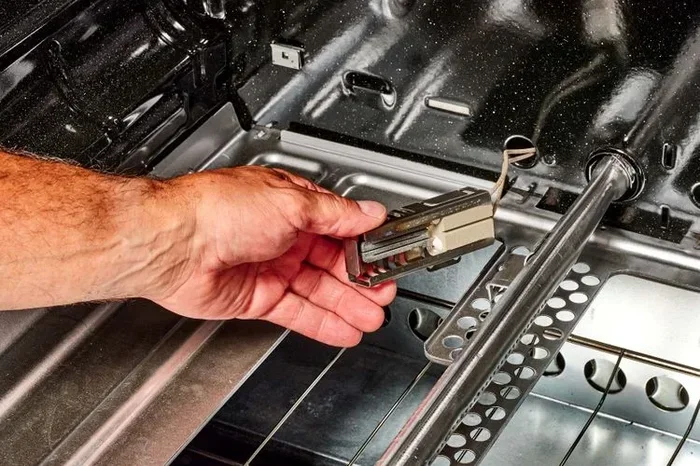
Open the oven door and remove the bottom rack. You’ll see the oven floor or a metal shield. Look for the igniter, which is usually mounted near the back of the oven base. It has one or two screws holding it in place.
Carefully remove the screws. Gently pull the igniter forward. You’ll see one or two wire connectors attaching it to the wiring harness. Take a photo of the wiring before you disconnect anything. This makes reinstallation much easier. Use needle-nose pliers to squeeze the connector tabs and pull the plugs straight out. Never yank on the wires.
Installing The New Igniter
Take your new replacement igniter and compare it to the old one. They should look identical. Attach the wire connectors to the new igniter by pressing them firmly until you hear a click. Secure the igniter with the screws you removed earlier. Make sure it’s positioned the same way as the old one. Reconnect the gas line if you shut it off, and turn the power back on at the breaker.
Testing The Igniter Before Reassembly
Before you put everything back together, test the new part. This step ensures you didn’t get a defective replacement.
Using A Multimeter To Check Resistance
Set your multimeter to the ohms (resistance) setting. Disconnect the igniter wires from the oven control board. Touch the multimeter probes to the igniter terminals. A good igniter should read between 20 and 50 ohms. If the reading is open (OL) or zero, the new part is also bad. You’ll need to exchange it.
Visual Inspection Of The Igniter Tip
Look closely at the glowing element. There should be no cracks or breaks in the ceramic base. The tip should be clean and free of white powdery residue. Even a new igniter can be damaged during shipping, so this inspection is crucial.
Common Mistakes To Avoid
- Forgetting to test the new part: Installing a defective igniter wastes time and returns shipping costs.
- Mixing up wire connectors: Always label or photograph the wiring before removal.
- Overtightening screws: Ceramic igniter bases crack easily if you force the screws too hard.
- Touching the glow element with bare hands: Oils from your skin can create hot spots and shorten the new igniter’s life. Use a clean cloth if you must touch it.
Preventing Future Igniter Problems
Once you’ve fixed the faulty igniter on gas oven, a few simple habits can keep it working for years.
Regular Cleaning Habits
Spills and grease buildup are the biggest enemies of your igniter. Every few months, remove the oven racks and the bottom panel (if accessible). Wipe the igniter and the surrounding area with a damp cloth and mild degreaser. Avoid spraying cleaners directly onto the igniter. Moisture can damage the electrical connections. A clean igniter heats up faster and lasts longer.
When To Call A Professional
Most homeowners can handle this repair with basic tools. However, call a licensed technician if you smell gas, if the oven still doesn’t heat after a new igniter, or if you’re uncomfortable working with electrical components. Gas appliance safety always comes first.
Expert Insights
Experienced repair techs often say that a weak igniter is the root cause of many oven heating problems people blame on the control board or thermostat. Before replacing expensive parts, always test the igniter first. A simple multimeter check can save you hundreds of dollars in misdiagnosed repairs. Keep a spare igniter in your pantry if your oven model is prone to failure.
Conclusion
Fixing a faulty igniter on gas oven is one of the most rewarding DIY repairs you can do. It’s safe, fast, and saves you money. You now know how to spot the symptoms, choose the right part, and complete the igniter replacement with confidence. Remember to disconnect power and gas, test the new part, and keep the area clean. Your oven should be back to heating evenly in no time. If you run into any trouble, don’t hesitate to reach out to a professional. Happy cooking!
Frequently Asked Questions
How do I know if my oven igniter is bad?
The most obvious sign is a weak or absent glow when you turn on the bake cycle. If your oven takes more than 15 minutes to start cooking, the igniter is likely failing. You can also test it with a multimeter for continuity.
Can I replace the igniter myself?
Yes, most homeowners can do this repair in under 30 minutes. You just need a screwdriver, a multimeter, and the correct replacement part. Always disconnect the power and gas first.
How much does it cost to replace a gas oven igniter?
The igniter part itself usually costs between $15 and $40. If you hire a technician, you might pay $100 to $200 for the service. Doing it yourself saves a lot of money.
Why does my new igniter glow but the oven still won’t light?
A weak new igniter might not draw enough current to open the gas valve. Check the resistance with a multimeter. It should read between 20 and 50 ohms. If the reading is off, the part is defective.
How long should a gas oven igniter last?
A typical igniter lasts 5 to 7 years with normal use. Heavy use or frequent spills can shorten its lifespan. Regular cleaning helps it last longer.
Is it safe to use the oven if the igniter is weak?
It’s not recommended. A weak igniter can let gas build up before lighting, which is a safety hazard. It also cooks food unevenly. Replace the igniter as soon as you notice the problem.