How to Cook Bacon in the Oven Perfectly Every Time
How to cook bacon in the oven is the simplest, most reliable method for crispy, even strips. This hands-off approach requires no flipping and eliminates stovetop splatter. You’ll learn the exact temperature, timing, and pro tips for oven-baked bacon that turns out perfectly every time.
There’s a quiet revolution happening in kitchens everywhere. How to cook bacon in the oven has become the go-to method for busy people who still want that perfect, crispy strip. No more standing over a hot pan, dodging grease splatters. No more flipping strips every few seconds. Instead, you simply lay the bacon on a sheet pan, slide it into the oven, and let it do its thing.
This method is hands-off, easy to clean, and produces evenly cooked bacon every single time. Whether you prefer thin, shatteringly crispy bacon or slightly chewy, thick-cut slices, the oven delivers. Oven-baked bacon is a bacon recipe that even beginners can master. Once you try it, you’ll never go back to the stovetop.
The idea is simple. You need a sheet pan, some parchment paper, and a wire rack if you have one. You lay the bacon strips in a single layer, pop the tray into a preheated oven, and wait. In about 15 to 25 minutes, you have crispy bacon that’s ready to eat. Cooking bacon in the oven also frees up your stovetop for other breakfast items like eggs and toast.
Key Takeaways
- Oven-baked bacon is hands-off: Lay strips on a pan, set a timer, and walk away.
- 400°F is the ideal temperature: It renders fat quickly for crispy, evenly cooked strips.
- A wire rack improves crispness: It lets grease drip away and promotes even airflow.
- Parchment paper prevents sticking: It makes cleanup effortless and saves your pan.
- Save the bacon grease: It’s a flavorful cooking fat you can use for days.
- Avoid overcrowding the pan: Spacing ensures every strip cooks uniformly.
- Reheat leftovers in the oven: A quick 350°F warm-up restores crunch without rubberiness.
📑 Table of Contents
Why Oven-Baked Bacon Is a Game-Changer
If you’ve ever cooked bacon on the stove, you know the drill. The popping grease, the smoke alarm, the uneven cooking. How to cook bacon in the oven solves all of those problems. It’s a bacon recipe that gives you consistent results without any babysitting.
The Problem with Stovetop Bacon
Stovetop bacon requires constant attention. You have to flip each strip to ensure even browning. The grease splatters, making a mess of your cooktop and increasing the risk of burns. Plus, the temperature fluctuates, which can lead to some strips being burnt while others are still floppy. Oven-baked bacon eliminates these issues entirely.
Why This Method Wins
With how to cook bacon in the oven, you spread the strips out in a single layer. Heat circulates evenly around each piece. The bacon cooks slowly and predictably. You can walk away and prep other parts of your breakfast. When the timer goes off, you have a perfect batch of crispy bacon with minimal cleanup.
| Feature | Stovetop Bacon | Oven-Baked Bacon |
|---|---|---|
| Attention Required | Constant flipping and monitoring | Hands-off; set a timer |
| Grease Splatter | High risk; messy cooktop | Minimal; grease drips away |
| Even Cooking | Uneven; hot spots | Uniform heat; even results |
| Cleanup | Greasy pan and splatter | One sheet pan or rack |
| Batch Size | Limited to pan size | Cook a full sheet at once |
| Active Time | 10–15 minutes | 20–25 minutes mostly passive |
As you can see, oven-baked bacon wins on almost every front. It’s the ultimate easy bacon method for a relaxed weekend breakfast or a quick weekday meal.
What You’ll Need for Perfect Oven Bacon
Before you start, gather a few simple items. You don’t need any fancy equipment. This bacon recipe keeps things basic and accessible.
Essential Tools
- Sheet pan: A rimmed baking sheet works perfectly. It catches all the grease and prevents oven spills.
- Parchment paper: This prevents sticking and makes cleanup a breeze. No need to scrub the pan.
- Wire cooling rack (optional): Placing bacon on a rack over the sheet pan allows grease to drip below. The result is even crispier oven-baked bacon.
- Tongs: For safely moving hot bacon strips without piercing them.
- Paper towels: For draining excess grease after cooking.
- Aluminum foil: A quick alternative to parchment for even faster cleanup.
Choosing the Right Bacon
Not all bacon is created equal. Thick-cut bacon takes a bit longer but delivers a hearty, chewy texture. Thin bacon crisps up quickly and is great for sandwiches. You can also try center-cut bacon for less fat. Any type works for this method. The key is to lay the strips without overlapping so each piece gets direct heat.
Quick Tips for Setup
- Always preheat the oven before placing the bacon inside. A cold start leads to uneven cooking.
- If you have a convection oven, reduce the temperature by 25°F for more even browning.
- Keep a spray bottle of water nearby to tame any minor smoke from the rendered fat.
Step-by-Step: How to Cook Bacon in the Oven
This is the heart of the guide. Follow these simple steps for how to cook bacon in the oven perfectly every time. The process is straightforward and foolproof.
Prep the Pan
Line your sheet pan with parchment paper. If you’re using a wire rack, place it on top of the pan. Arrange the bacon strips in a single layer. Leave a little space between each piece so the hot air can circulate. Don’t overlap the strips. Overlapping leads to uneven cooking and soggy spots. For a full breakfast, you can use two sheet pans and bake in batches.
The Perfect Temperature and Time
Preheat your oven to 400°F (200°C). This is the sweet spot for crispy bacon. Place the pan on the middle oven rack. Cook for 15 to 20 minutes. The exact time depends on your oven and how crispy you like it. Thick-cut bacon may need 22–25 minutes. Thin bacon can be done in 12–15 minutes.
Here’s a quick reference for oven-baked bacon timing:
- Thin-cut bacon: 12–15 minutes at 400°F
- Regular-cut bacon: 15–20 minutes at 400°F
- Thick-cut bacon: 20–25 minutes at 400°F
Two Methods: Sheet Pan vs. Wire Rack
The sheet pan method is the simplest. You place bacon directly on the parchment-lined pan. The bacon fries in its own rendered fat, which keeps it moist. The wire rack method elevates the bacon above the pan. This allows the grease to drip off completely, resulting in a lighter, crunchier texture. Both methods produce excellent oven-baked bacon. Choose the one that suits your preference.
Checking for Doneness
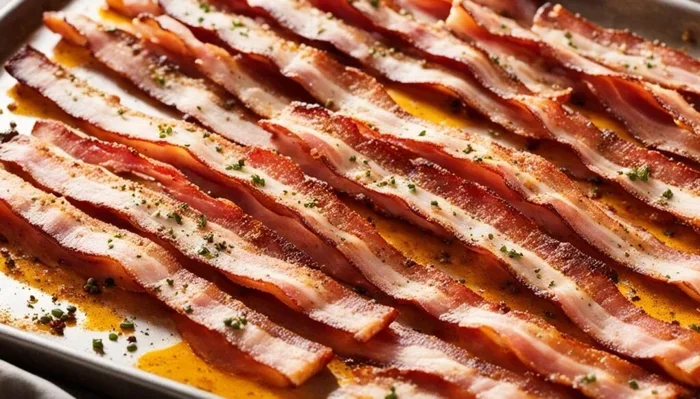
At the 15-minute mark, start checking the strips. The bacon is done when it’s deep golden brown and the fat has rendered out. The strips should look slightly curled but not burnt. If you like your crispy bacon very dark, give it an extra 2–3 minutes. Keep a close eye on it during the last few minutes to avoid burning. The bacon will firm up as it cools.
How to Know When It’s Done
Look for a uniform, deep amber color across the entire strip. The fat should be clear and slightly bubbly, not white or milky. The edges will curl slightly inward. If the bacon still looks pale and floppy, give it another 3–5 minutes. Remember that cooking bacon in the oven continues to cook the strips slightly after you remove them from the heat.
Pro Tips for the Crispiest, Most Even Bacon
Want to elevate your oven-baked bacon from good to great? Try these simple tricks. Each one makes a noticeable difference in texture and flavor.
Line the Pan with Foil and Parchment
For the easiest cleanup, double-layer your sheet pan. Use aluminum foil on the bottom, then parchment paper on top. The foil reflects heat for even cooking, while the parchment prevents sticking. This hack is a game-changer for how to cook bacon in the oven on busy mornings.
Use a Wire Rack for Maximum Crispness
A wire rack is the best-kept secret for crispy bacon. Elevating the bacon allows the grease to drip away completely. The bacon cooks in its own rendered fat but doesn’t sit in a pool of it. This results in a lighter, crunchier texture. You can find wire racks for just a few dollars. It’s a small investment that transforms your easy bacon.
Don’t Crowd the Strips
Give each strip its own space on the pan. Crowding the bacon traps steam and creates uneven patches. The goal is for hot air to reach every surface. If you need to cook a large batch, use two sheet pans and rotate them halfway through. This ensures all the breakfast bacon finishes at the same time.
Save the Bacon Grease
Don’t throw away the rendered grease! Bacon grease is a flavor powerhouse. Strain it through a fine mesh sieve into a jar and store it in the fridge. Use it to fry eggs, roast vegetables, or make savory cornbread. It’s a waste not to keep this liquid gold from your bacon recipe.
Try a Sprinkle of Brown Sugar or Black Pepper
For a sweet or savory twist, sprinkle a little brown sugar or cracked black pepper on the bacon before baking. The sugar caramelizes into a glaze. The pepper adds a subtle kick. These small additions turn simple oven-baked bacon into a gourmet treat. You can also try a dusting of cayenne for a spicy kick.
How to Get Chewy Bacon in the Oven
If you prefer chewy bacon over crispy, lower the oven temperature to 350°F and reduce the cooking time by a few minutes. Keep a close eye on the strips and pull them out when they’re still slightly flexible. The bacon will firm up as it cools. This method works well for thick-cut bacon that you want to use in sandwiches or wraps.
Common Mistakes That Ruin Oven Bacon
Even with a great bacon recipe, small errors can lead to disappointing results. Here are the mistakes to avoid when you cook bacon in the oven.
Overcrowding the Pan
We touched on this, but it bears repeating. Overcrowding is the number one mistake. When strips touch or overlap, they steam instead of roast. You end up with flabby, uneven bacon. Give each strip its own space. If you need more, use a second pan. Even cooking depends on proper spacing.
Wrong Oven Temperature
Some recipes call for 350°F, but 400°F is the ideal temperature for crispy bacon. At 350°F, the bacon takes too long and can become chewy in spots while the edges dry out. 400°F renders the fat quickly and creates that satisfying crunch. Oven temperature matters more than you think. Always preheat fully before adding the bacon.
Skipping the Drain
After baking, the bacon is still sitting in a pool of hot grease. If you leave it on the pan, it will continue to cook and can become overly hard or burnt. Always transfer the strips to a paper towel-lined plate. This stops the cooking process and gives you perfect bacon with a great texture.
Using a Dirty or Wrinkled Pan
A warped or dirty sheet pan can cause hot spots. The bacon will burn in some areas and stay pale in others. Always use a flat, clean baking sheet. If you’re using foil, make sure it’s smooth and not bunched up. This ensures consistent heat distribution for your easy bacon.
Opening the Oven Door Too Often
Every time you open the oven door, you release heat and slow down the cooking process. Resist the urge to check too frequently. Set a timer and trust the process. How to cook bacon in the oven works best when you let the heat do its job undisturbed.
How to Store and Reheat Leftover Bacon
Sometimes you make more crispy bacon than you can eat in one sitting. Leftover oven-baked bacon keeps well if stored properly. Here’s how to handle it.
Storing Cooked Bacon
Let the bacon cool completely before storing. Place the strips in an airtight container or a zip-top bag. You can layer them with paper towels to absorb any remaining moisture. Refrigerated leftover bacon stays fresh for up to 5 days. For longer storage, you can freeze cooked bacon for up to 3 months. Freeze strips in a single layer on a baking sheet first, then transfer to a freezer bag. This prevents them from sticking together.
Reheating Without Losing Crispness
Reheating is the trickiest part. You don’t want soggy bacon. The best method is to place the strips on a baking sheet in a 350°F oven for 3–5 minutes. This brings back the crunch without overcooking. You can also use a toaster oven or a microwave, but the oven gives the best results. Avoid microwaving for too long, or the bacon will turn rubbery. How to cook bacon in the oven also applies to reheating; it’s the same gentle, even heat that works so well.
Creative Ways to Use Leftover Bacon
Don’t let leftover oven-baked bacon go to waste. Chop it and toss it into a green salad for a savory crunch. Crumble it over creamy tomato soup. Use it as a topping for homemade pizza. Fold it into a breakfast burrito or a grilled cheese sandwich. The possibilities are endless. Cooking bacon in the oven gives you more than just a breakfast side; it gives you a versatile ingredient for all your meals.
Conclusion: The Joy of Oven-Baked Bacon
How to cook bacon in the oven is a life-changing skill for any home cook. It’s simple, reliable, and delivers crispy bacon that looks and tastes amazing. You get consistent results without the mess and stress of stovetop cooking. Whether you’re feeding a crowd or just yourself, this bacon recipe never fails.
Once you master the basic method, you can experiment with different cuts, temperatures, and seasonings. Save the bacon grease for another day. Share your perfectly cooked strips with family and friends. The beauty of oven-baked bacon is that it frees you up to enjoy the morning instead of hovering over a hot pan.
Give this method a try on your next weekend breakfast. You’ll wonder how you ever cooked bacon any other way. Cooking bacon in the oven is the easiest, most delicious way to start your day. Enjoy every crispy bite.
Frequently Asked Questions
What temperature should I cook bacon in the oven?
Preheat your oven to 400°F (200°C). This temperature renders the fat quickly and produces evenly crispy oven-baked bacon. It’s the ideal setting for both thin and thick cuts.
How long does it take to bake bacon in the oven?
Most bacon cooks in 15 to 25 minutes at 400°F. Thin-cut bacon may be done in 12–15 minutes, while thick-cut bacon can take up to 25 minutes. Start checking at the 15-minute mark for your preferred level of crispness.
Do I need to flip bacon when cooking it in the oven?
No. One of the biggest advantages of how to cook bacon in the oven is that it’s completely hands-off. The even heat circulates around each strip, so you don’t need to flip them at all.
Can I use aluminum foil instead of parchment paper?
Yes. Aluminum foil works well and makes cleanup even faster. However, parchment paper is better for preventing sticking. You can also use a combination of foil on the pan and parchment on top for the best of both worlds.
Is it better to use a wire rack for oven bacon?
A wire rack is optional but highly recommended for extra-crispy results. It allows grease to drip away, so the bacon fries in its own fat without sitting in a pool of grease. This produces a lighter, crunchier texture.
How do I store leftover oven-baked bacon?
Let the bacon cool completely, then store it in an airtight container in the refrigerator for up to 5 days. You can also freeze it for up to 3 months. Reheat in a 350°F oven for 3–5 minutes to restore the crunch.